Street Benches Beyond the Park
Street benches beyond the park give people a place to pause near errands and transit. Learn how placement, access, shade, and upkeep shape a useful seat.
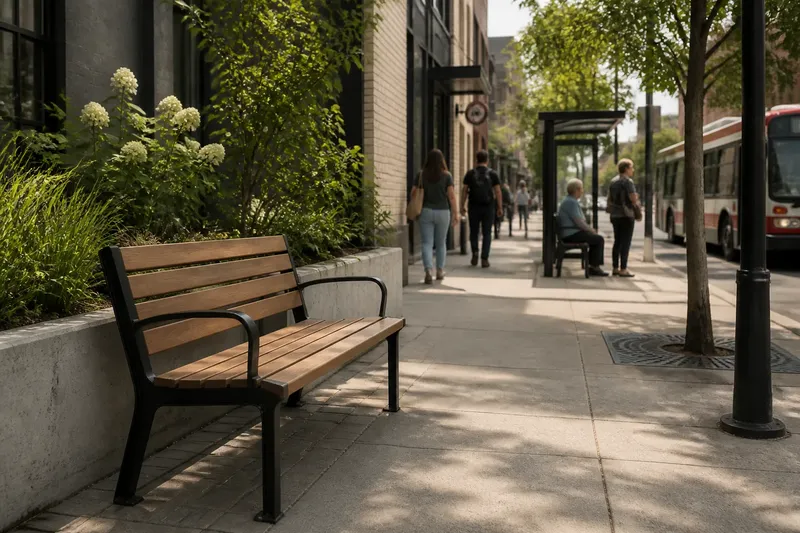
Where can you sit on a street when there is no park nearby and no café chair to borrow? Street benches beyond the park answer that practical question by placing a seat along an everyday route, where people wait, rest, or watch the street without entering a business.
Seats along routes
A street bench is easiest to understand through its setting. A park bench belongs to a landscape arranged for lingering; a seat on a sidewalk or beside a transit stop shares space with entrances, deliveries, and pedestrian movement.
There is no single historical sequence that explains every street bench. Outdoor seating appears in many kinds of places, including gardens, stations, and public grounds, but local customs and street layouts differ. The useful distinction here is not which seat came first. It is whether a person can pause along an ordinary route without needing to buy something or enter a designated recreation space.
That makes placement more than decoration. A seat beside a library entrance may serve someone waiting for a companion; one near a bus stop may offer a place to rest while watching for a vehicle. The reason to stop is often already present. The bench makes the pause easier.
Position and access
Start with the walking route. A bench should not force pedestrians into a narrow gap or block an entrance. Look at the full approach, including the space someone needs to reach the seat and stand up again.
Then consider what a seated person faces. A planted edge, a small plaza, or ordinary street activity can make a seat feel connected to its surroundings. A blank wall or a barrier may leave it technically available but awkward to use. Orientation also has to account for traffic noise, direct sun, and nearby doors.
Access features can serve different needs. Armrests may help some people sit down and rise; divided seats may make that easier for some users while limiting how a person can stretch out. Neither feature settles the question of who can use the bench. Check the seat alongside its approach, surroundings, and intended users.
Placement decisions
Before proposing a new seat or moving an existing one, look for concrete signs of how the space is used. This list is a way to connect each observation to a decision, not a substitute for local access requirements or site review.
- Walking path: Observe whether people have to turn sideways or step around the seat. If the route is pinched, then consider a wider furnishing zone or another location; if the path stays clear, then retain the position for further review.
- Approach: Observe whether someone can reach the seat without crossing a barrier or weaving between objects. If access is awkward, then shift the seat or clear the approach; if it is direct, then keep assessing the rest of the site.
- Reason to stop: Observe whether people already wait, meet, or pause nearby. If they do, then consider placing the seat near that activity; if they do not, then look for another location with a clearer purpose.
- View and orientation: Observe whether the seat faces a blank wall, a useful view, or passing activity. If the view discourages sitting, then test a different orientation; if it feels connected to the street, then keep that direction under consideration.
- Sun and weather: Observe whether direct sun, rain exposure, or poor drainage makes the seat difficult to use. If exposure is the obstacle, then consider shade, cover, drainage, or a different site; if conditions are manageable, then proceed to the next check.
- Condition: Observe loose slats, peeling finish, or litter around the seat. If the structure is sound but the area is neglected, then address upkeep first; if parts are damaged, then arrange repair or replacement review.
Say a neighborhood association is considering a bench at a busy corner. The starting conditions are a seat facing a service wall, a narrow walking line beside it, and a planted edge a short distance away. The association first checks whether moving the seat toward that edge would leave a clear route; it then considers turning the seat toward the street activity and checking shade and drainage at the new position. The resulting decision is conditional: if the approach and walking line remain usable, the association can propose the new position for local review; if the route becomes cramped or the edge collects water, it should keep looking for another site. The expected observable result is a seat that is easier to approach without forcing pedestrians around it, not proof that every passerby will use it.
Street benches beyond the park?
Why place a bench on a street?
A street bench offers a place to rest or wait outside parks and businesses. Its position can support an existing pause along an everyday route.
How does it differ from a park bench?
A park bench sits within a setting intended for recreation or lingering. A street bench has to share space with walking routes, entrances, deliveries, and traffic.
Where should a street bench face?
Consider a view or activity that makes sitting feel natural, while accounting for noise, sun, and pedestrian movement. If the seat faces a blank wall or interrupts access, consider another orientation.
What should be checked before choosing a location?
Check the walking path, approach, nearby activity, shade, drainage, and the condition of surrounding space. Follow local access requirements and consult a qualified professional when site decisions require technical review.
Routine care
A bench can be sound while its setting makes it unpleasant to use. Litter, standing water, overgrown planting, or a blocked approach may call for site maintenance rather than a new piece of furniture. Loose or damaged parts call for repair review.
For street benches beyond the park, the useful question is whether a person can reach the seat, use it without disrupting the route, and sit in reasonable comfort. Check the path and the surroundings before judging the object itself; a modest change in placement or upkeep may address the problem more directly than a replacement.